For a long time I thought my job was to build the things other people couldn't. And I was good at it. I took on the technical problems nobody else wanted, and I made them work. But the longer I did it, the more I noticed something. The work that actually mattered usually wasn't the code I wrote. It was the moment a team finally understood what they were building. The conversation where a leader saw the problem differently. The assumption someone finally said out loud, the one that had been quietly steering the whole project.
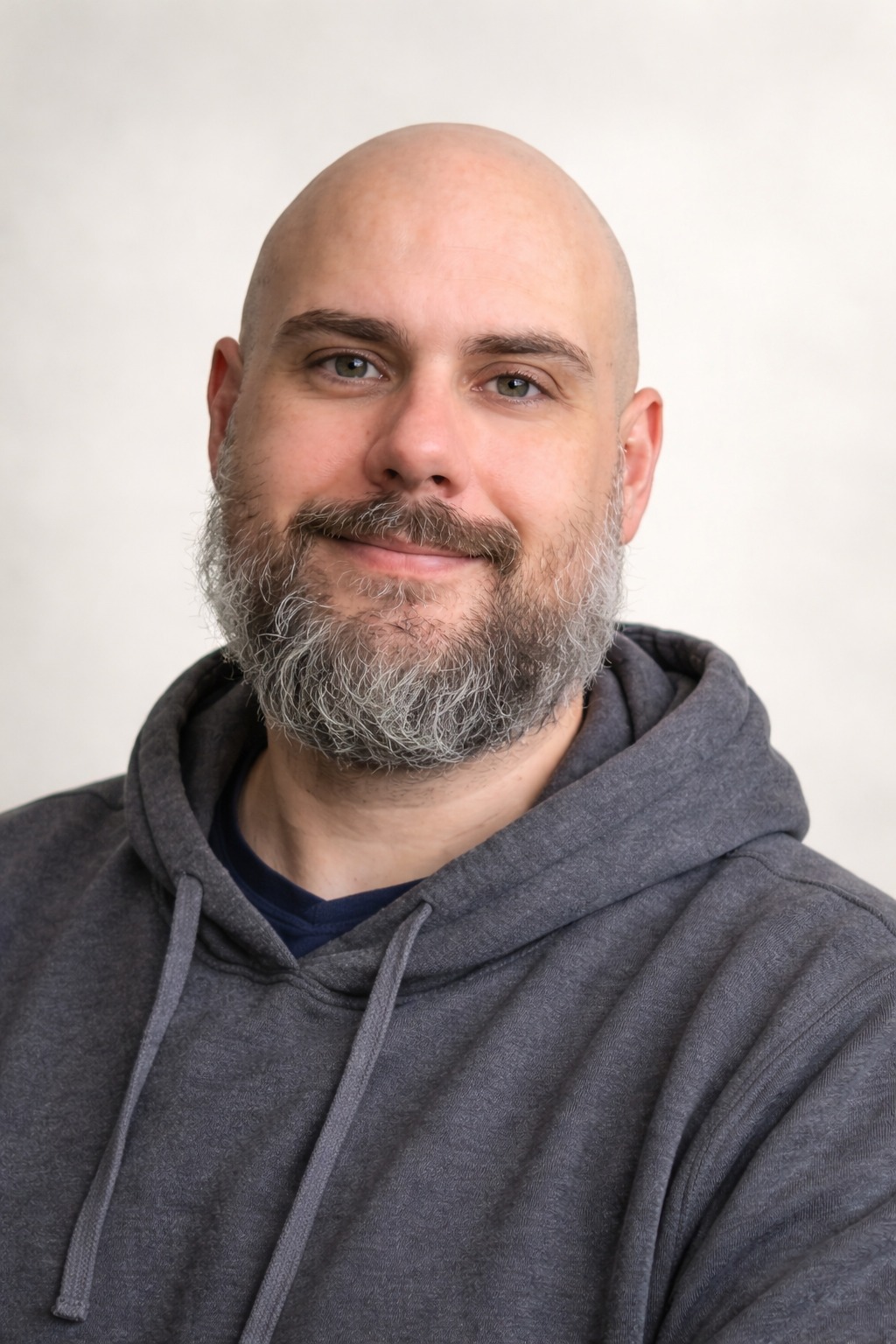
Michael Payne, founder of Coexius.
The building was the easy part. The understanding was the work.
Here's what I've come to believe, after enough projects to know it's true and not a slogan.
Strategy without implementation creates blind spots. You plan in a world that doesn't survive contact with reality. Implementation without understanding creates waste. You build the wrong thing, beautifully. The value lives in the space between the two.
Most firms live on one side or the other. They sell you strategy, or they sell you hands. I built Coexius to work in the space between, because that is where the expensive mistakes get made, and where they get prevented.
The most important thing I learned, I learned from something that failed.
Early on, I helped build a business around a product that genuinely solved a real problem. The product worked. The implementation worked. It failed anyway, because the people we had partnered with carried reputation problems in the market that no one had thought to check. The problem wasn't the product. It was something we didn't know to investigate.
That stayed with me. The risks you can see are rarely the ones that get you. The dangerous ones are the assumptions nobody has questioned yet. A lot of my work now is finding those before they cost you.
I've worked across software, logistics, healthcare, government systems, financial and professional services, and running businesses of my own. Companies of eight people, and companies of eighty-seven thousand.
The industries use different words. The underlying problems are almost always the same: communication gaps, misaligned assumptions, work that's become more complex than anyone intended, decisions made before the problem was understood. Seeing the same patterns across that many contexts is most of what I bring.
I don't start with a solution. I start by understanding what's actually going on, because I've watched too much money get spent solving the wrong problem.
It also means I can step into something that's already moving, at almost any scale, and be useful quickly. Whether you can't tell if your team is delivering, you need someone senior to lead them, an initiative is stalling, or you just know there's a simpler way, the first job is the same. Understand it clearly. Then act.
I'd rather show you than tell you. See the work
I get the real picture first. The people doing the work, not just the ones describing it. The goals, the constraints, and the assumptions nobody has examined.
I map what's actually going on, so the hidden pieces and the real constraint become visible. This is where most of the "I hadn't seen it that way" moments happen.
I get everyone working from the same picture. Most organizational slowness is people quietly operating from different ones.
We do the smallest thing that actually moves it. Sometimes that's technology. Often it isn't.
We check it against reality and adjust. Progress is the goal, not loyalty to a plan that stopped being true.
The best way to find out if this fits is to talk. You'll be talking to me.